


Digital Management Outsourcing:
A Conversation with Yahav Schwartz
In a world where nearly every business interaction begins in the digital space, more and more business owners are facing a complex question:
How do you actually manage all of this properly? Not just campaigns, but an entire system that connects audience, messaging, product, and sales process.
At LUNARIS, we sat down with Yahav Schwartz, founder of MY-MARKETING, a digital manager and performance marketing lecturer, to gain a deeper understanding of what “digital management outsourcing” really means — and why more businesses are shifting toward this model.
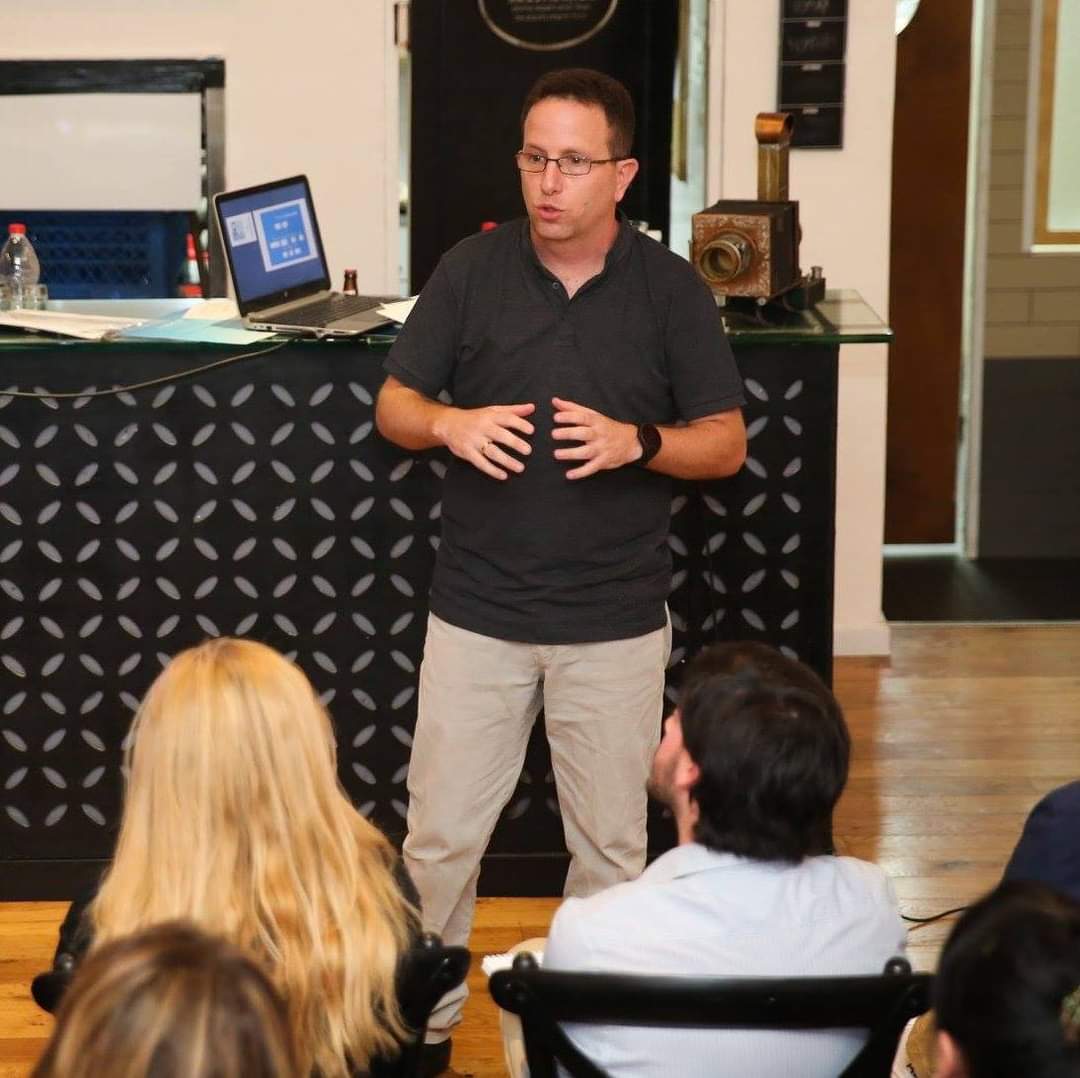
LUNARIS: Yahav, before we dive in — how would you define what you do on a day-to-day basis?
Yahav Schwartz:
I come from a performance marketing background, but over time I realized that for most businesses, the problem isn’t the campaigns themselves. Many are already advertising, driving traffic, even generating leads — but something doesn’t fully connect.
What I do today is look at the entire system. I focus on how digital actually works for the business — not just at the media level, but across the full process, from the initial message to the final sale. That includes strategy, campaigns, conversion optimization, and working with different teams.
At the same time, I also teach digital marketing, so I’m constantly moving between theory and real-world execution.
LUNARIS: When people talk about digital management outsourcing — what exactly do they mean?
Yahav Schwartz:
It’s a term that confuses a lot of people. Most assume it just means outsourcing campaigns to an agency, but it’s much broader than that.
Digital management outsourcing means the business doesn’t have an in-house digital manager. Instead, they bring in someone external who takes responsibility for the entire digital activity. That includes strategy, campaigns, data analysis, managing vendors, and sometimes even connecting directly with sales and CRM systems.
In many ways, it’s like having a digital or marketing manager — just not as a full-time internal employee.
LUNARIS: So how is that different from working with a traditional marketing agency?
Yahav Schwartz:
The difference is in the approach. A marketing agency usually focuses on execution — launching campaigns, producing creatives, managing media performance.
Digital management is about overall direction. Sometimes that means stopping campaigns, changing a landing page, or working on the sales process itself.
I don’t just ask “how many leads came in,” I ask “what happens to them afterward?” That’s the difference between activity and actual results.
LUNARIS: Who is this model best suited for?
Yahav Schwartz:
There are a few types of businesses where this is especially relevant.
The first is growing businesses — companies already investing in digital but struggling to create consistency. They often feel like they’re constantly testing things without truly understanding what works.
The second group includes businesses that don’t want or can’t justify hiring a full-time digital manager. It’s an expensive role, and not every company needs someone 100% dedicated. Outsourcing gives them broader experience without the full cost.
The third group is companies that already have a team — a media buyer, a designer, maybe a copywriter — but no one leading. There’s activity, but it’s not aligned under one clear strategy.
LUNARIS: What do you see as the biggest advantage of this model?
Yahav Schwartz:
Clarity.
When you’re external, you’re not part of the internal habits or organizational dynamics. You’re not used to what’s not working. You can identify issues quickly and act on them.
Also, you bring experience from multiple businesses. You start recognizing patterns — what works in certain industries, how audiences behave, what repeats itself. That’s hard to develop when you’re working inside a single company.
LUNARIS: Are there any downsides?
Yahav Schwartz:
Yes, it’s not a magic solution.
If there’s no collaboration from the business side, it won’t work. This model requires communication, transparency, and understanding that it’s a shared process.
Also, if the expectation is that someone external will “fix everything” without internal involvement — that usually fails.
LUNARIS: What does the onboarding process look like with a new client?
Yahav Schwartz:
I don’t start with campaigns — that’s probably the most important thing.
First, I focus on the fundamentals: who the audience really is, what problem they’re trying to solve, what the business is offering, and how the sales process actually works.
A lot of issues show up right there. Only after there’s clarity do we start building the digital activity.
LUNARIS: Can you share an example where this approach changed results?
Yahav Schwartz:
I worked with a client in the medical aesthetics field. They already had campaigns running and were generating leads, but they weren’t closing deals.
Instead of immediately changing campaigns, we looked at what happened after the lead came in. We found issues with response time, inconsistencies between the ad message and the sales call, and a lack of clarity in the offer.
We focused on fixing the process rather than increasing the budget. The result was a significant improvement in closing rates, without major changes to cost per lead.
LUNARIS: You emphasize conversions over traffic. Why?
Yahav Schwartz:
Because traffic is just the beginning.
You can drive a lot of visitors, but if they don’t take action — it doesn’t matter.
The real work is understanding what moves someone from interest to action. Sometimes a small change in messaging or on a landing page can make a bigger impact than increasing ad spend.
LUNARIS: What’s the most common mistake you see businesses make?
Yahav Schwartz:
Thinking that campaigns are the solution.
If the foundation isn’t strong — the messaging, the offer, the process — then campaigns will only expose the problem faster.
LUNARIS: How do you measure success?
Yahav Schwartz:
I look at the entire funnel. Not just leads, but lead quality, closing rates, and cost per acquisition.
At the end of the day, the question is whether digital is generating revenue.
LUNARIS: Where do you see this field heading?
Yahav Schwartz:
More automation, more AI, more systems.
But at the same time, a greater need for people who can think strategically. The tools are becoming accessible to everyone — understanding how to use them effectively is not.
LUNARIS: Finally, what would you say to a business owner considering outsourcing?
Yahav Schwartz:
Don’t start by asking if you need a campaign.
Ask whether you have a system that actually works. If you don’t — then what you probably need is management, not just execution.
By the end of the conversation, one thing became abundantly clear: sustainable digital growth isn't just about launching campaigns or driving raw traffic.
It is a structured process built on clarity, deep funnel analysis, and strategic management.
Yahav represents a practical example of how shifting from a fragmented execution approach to holistic digital management can turn basic online activity into a measurable, revenue-generating engine.
You can continue online to explore and learn from his work at MY-MARKETING.